







A Japanese teapot is chosen first according to the tea you drink and how you serve it: alone or with others, everyday sencha or a tea to share. There are three main families. Here is how to tell them apart.
The cast iron teapot: to keep the heat and share
Japanese cast iron teapots come mainly from Morioka, in Iwate Prefecture, where Nanbu tekki, the local cast iron, has been worked since the 17th century. Heavy and stable, they retain heat well.
Beware of a common confusion. In Japan, the cast iron kettle (tetsubin), unenamelled, goes on the fire to heat water. The cast iron teapot, on the other hand, is enamelled inside and is used only for brewing: it never goes on the fire. Our cast iron teapots are of this second type, with a removable stainless steel strainer for loose tea.
Their relief decorations feature classic motifs: arare, small raised dots lined up like hailstones, cherry blossoms, small geometric flowers or goldfish. Holding 600 to 650 ml, they are well suited to several people.
Care: rinse with clear water, without soap or abrasive sponge, then dry with the lid open. No dishwasher, no microwave, no direct heat.
The Tokoname kyusu: the green tea teapot
The kyusu is the Japanese teapot with a side handle: you hold it in one hand and pour with a turn of the wrist. Tokoname, in Aichi Prefecture, is one of the six ancient kilns of Japan and is renowned for its teapots.
Our Tokoname kyusu have a built-in strainer, ceramic or stainless steel depending on the model, which holds back the fine leaves of sencha. Holding 310 to 520 ml, they are everyday teapots, for one to three cups of sencha or hojicha. Some are engraved with a peony, others decorated with a weeping cherry tree.
Care: wash by hand with clear water.
The ceramic teapot: light and colourful
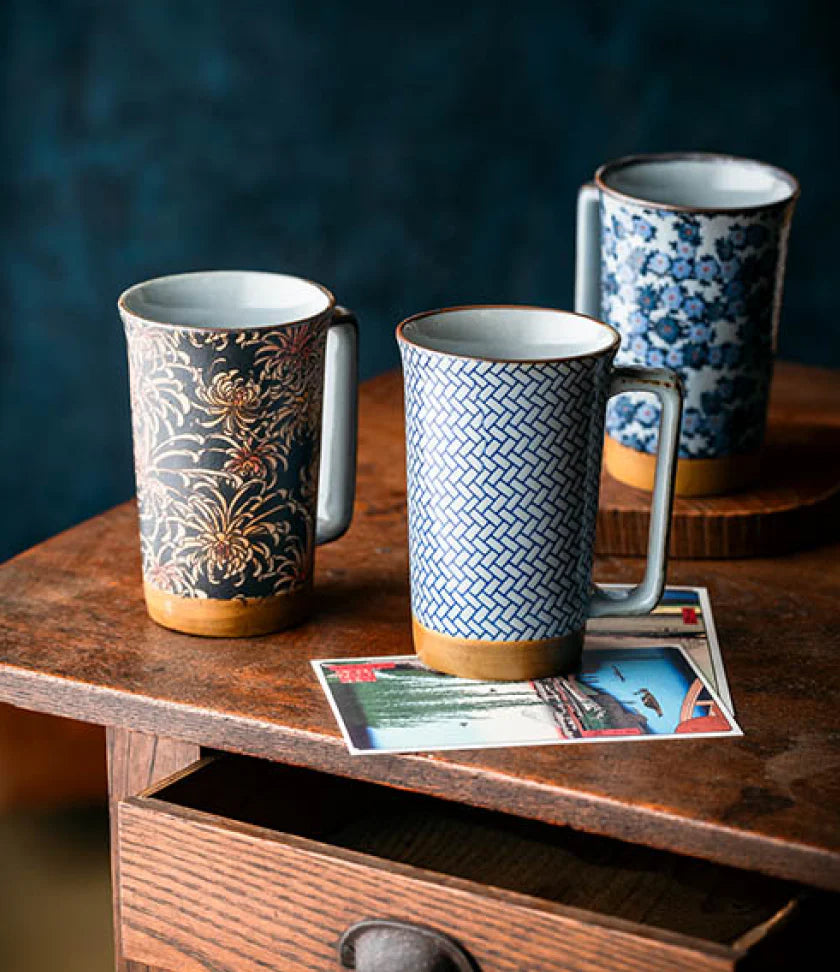
Ceramic teapots from the Mino region, around Toki and Tajimi in Gifu Prefecture, are lighter and often more colourful: butterflies, fans, aranami waves, retro flowers. They hold about 500 ml, enough for two to three cups, and several match our mugs. Some have a built-in strainer.
Care: hand washing recommended, dishwasher not advised; they can go in the microwave.
Which capacity to choose?
As a guide:
- 300 to 400 ml, for one or two people;
- about 500 ml, for two or three people;
- 600 to 650 ml, for a tea to share.
A tip for green tea
Japanese green tea does not like boiling water, which brings out its bitterness. Let the water cool a little after boiling. Sencha brews quickly: usually around one minute, to adjust to your taste and the tea's instructions.
Frequently asked questions
Can a cast iron teapot go on the fire?
No. Our cast iron teapots are enamelled inside and are used only for brewing. Only the unenamelled cast iron kettle, the tetsubin, goes on the fire.
Which teapot for sencha?
The side-handled kyusu is the traditional shape: its fine strainer holds back the small sencha leaves.
Are Japanese teapots dishwasher safe?
Not cast iron or Tokoname clay. For ceramic, hand washing is recommended.
Discover all our Japanese teapots, as well as our tea sets, teacups and tea caddies to keep your leaves away from air and light.


